
Supergirl (2026)

Is it great? No, but still I don’t understand all the hate.
For years now, the MCU has suffered from diminishing returns, with a constant tide of interconnected movies, television shows, and assorted media ensuring that almost nothing feels like an event anymore. For a long time, sitting down to watch a new Marvel project has felt like surveying the buffet options at the International House of Oatmeal.
So naturally, when DC rebooted its own cinematic universe, it immediately began announcing “timelines” reminiscent of Marvel’s increasingly pretentious “phases,” while surrounding the movies with a growing collection of small-screen projects of varying quality.
James Gunn’s Superman was a success, and certainly more fun than Man of Steel or virtually anything else produced by the DCEU, but it was also an overstuffed visual assault that exhausted me almost as much as Zack Snyder’s films did.
Even worse, I came away wondering whether DC was already repeating one of its predecessors’ fundamental mistakes:
Why develop these characters over time when we can just GO THERE NOW?
Gunn’s Superman barely leaves its title character enough room to breathe, so when Supergirl turned up for her amusing cameo at the end, my reaction wasn’t excitement so much as:
“Oh. So, we’re getting a Supergirl movie next.”
And I wasn’t even sure I wanted one yet.
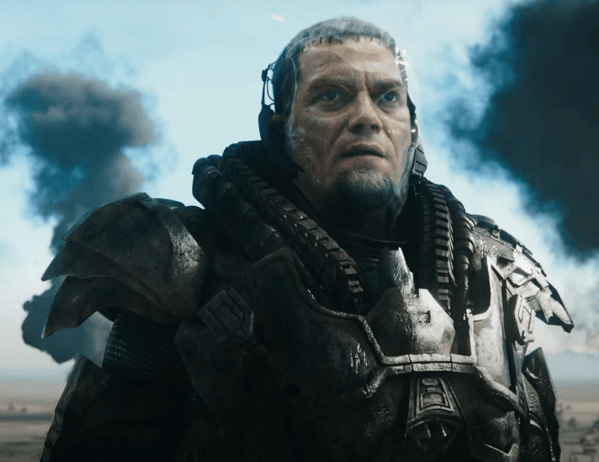
“Neither was I…“
Studios long ago learned to industrialize the entertainment experience, and the machinery was already moving on to the next hero, the next adventure, and the next piece of the larger DC universe.
This left Supergirl with an unenviable assignment. It had to introduce a very different Kryptonian hero while distinguishing itself from a genre that has spent years watering down its own product. It also had to navigate the tiresome cultural discourse that now seems determined to turn every female-fronted action movie into an ideological litmus test before anyone gets around to discussing whether it’s even any good.
And Supergirl is, actually…pretty good!
It introduces us to Kara Zor-El (Milly Alcock), the cousin of Superman/Clark Kent (David Corenswet). Her parents, like his, whisked her away to protect her from catastrophe, but Kara’s journey to Earth was very different from Clark’s. Where his led him straight to loving parents and a stable upbringing, Kara’s path was fraught with tragedy, conflict, and destruction.
When we meet her, Kara reads as young, disaffected, and cynical. Where Clark’s optimism was nurtured by a cohesive family dynamic, Kara arrived carrying memories of a world that had already normalized how easily everything can be taken away.
In fact, we discover that each year, for her birthday, Kara leaves Earth, travels to a planet with a red sun, where her powers are nullified, and returns to being a “normal” Kryptonian with no powers.
And why does she do this?
To get hammered, baby!

You think you’re better than me?!? You’re…*hick?*…NOT!!!
It turns out the same yellow sun that gives Clark and Kara their powers also prevents alcohol from affecting them (not that Superman would ever drink). The film plays this for laughs, continuing to frame Kara as the churlish, irresponsible party girl we met at the end of Superman.
But there’s a melancholy built into Kara that will come to define her character and provide Supergirl with its moral center. She’s a sullen alcoholic who lives in what looks like an updated version of Lone Starr’s Winnebago from Spaceballs, with nothing to keep her company but her dog Krypto, her music collection, and a liquor cabinet fully stocked with liquid sadness.
And since she can’t just GET drunk, the process of doing so requires considerable planning and effort.
Man, that is dark.
This makes me curious what a Supergirl/Wolverine crossover might look like. In this reality, the whole story would probably start at a truck stop in Manitoba and end with two lifeless corpses orbiting Betelgeuse in a derelict Space Camper.
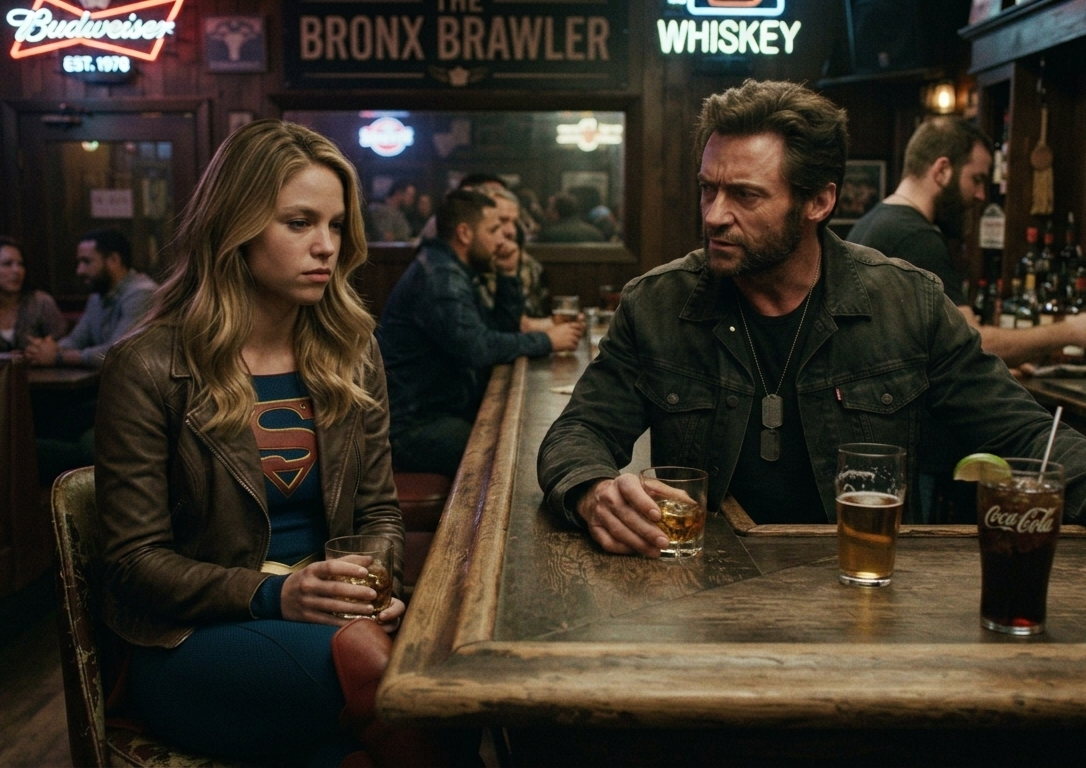
It’s the same dream…every night…right?
But in this universe, Kara and Krypto are logging time in an unspecified cosmic bar when a young girl named Ruthye Marye Knoll (Eve Ridley) enters, swinging around a sword and proclaiming vengeance against someone named Krem of the Yellow Hills (Matthias Schoenaerts).
Krem and his gang of outlaws have murdered Ruthye’s family, and she is seeking any and all takers to join her campaign of retribution.
Unfortunately, some of Krem’s boys happen to be present, and all hell breaks loose, requiring Kara to save Ruthye from what would have been immediate death. Predictably, Ruthye is now marked for elimination, and Kara finds herself unintentionally drawn into the conflict by virtue of being the Good Samaritan on hand.
At this point, you would be forgiven for identifying the setup as an assortment of Spaghetti Western tropes stuffed into the Mos Eisley Space Cantina from Star Wars and grafted onto the DC Universe as narrative shortcuts.
And you’d be right. But the familiar machinery quickly gets Kara into Ruthye’s story.
We’ve all seen versions of the reluctant cynic putting themselves between a ruthless gang and an innocent victim, led by everyone from Clint Eastwood to Sharon Stone to Jason Statham. But here, that familiar setup serves as a launchpad to reveal a surprisingly complex Kara Zor-El.
We were introduced to her as an anarchic child, then reacquainted with her here as a rebellious second banana to a guy who’d turn himself in for jaywalking. And finally, over the course of 108 minutes, our main character’s internal agency is revealed in a way I’d imply we were denied by the most recent Superman film.
For all her insistence that she’s “winging it,” unlike Clark, Kara is remarkably good at reading the room.
Clark tends to fight like a man who knows he’s nearly invulnerable. Kara fights like someone who actually knows how to fight—which, ironically, harkens back to a pivotal scene in Man of Steel. Kara reads opponents, chooses her battles, and, when possible, manipulates circumstances to her advantage before throwing the first punch.
More importantly, she understands tactics—that winning a fight and accomplishing the objective aren’t necessarily the same thing.
Faced with opponents she can easily overpower, Kara also shows restraint. And upon encountering Lobo (Jason Momoa), a wildly muscled bounty hunter who feels like fan service, looks like a lost member of KISS, and possesses abilities the film never defines, she makes the cautious assumption that underestimating him would be foolish.

Can we agree that Lobo, as a character, is just a hat on a hat that this film could’ve done without?
I’d gladly exchange Zombie Gene Simmons for another few minutes of character development.
Kara may be improvising, but she is anything but a nihilist.
“Clark sees the good in everyone; I see the truth,” she tells Ruthye, trivializing her cousin and elevating herself.
Kara claims to have a harder view of the universe yet repeatedly behaves according to a surprisingly similar moral code. She avoids killing when she doesn’t have to, protects people she has no obligation to protect, and complains bitterly about Ruthye’s problems while repeatedly demonstrating her inability to simply walk away.
And eventually, we understand why.
Clark inherited Krypton, but Kara remembers it.
That distinction becomes increasingly important as the story unfolds, giving Alcock a bit more to work with than Corenswet had in Superman. Kara’s understanding of mercy may be less absolute than her cousin’s, but it still comes from a morally honest point of origin.
Unfortunately, the movie doesn’t always trust this characterization enough to carry the plot.
Kara’s dog Krypto—arguably Superman‘s breakout character—accompanies her on this adventure, but a subplot about his fate binds Kara to Ruthye in a way that seems designed to sidestep the character development it would otherwise require to give Kara the agency to choose to help.
And to make the audience believe it rather than merely accept it because it happens onscreen.
That’s frustrating because superhero movies have repeatedly demonstrated how much more effective their spectacle becomes when we’re emotionally connected to the person experiencing it.
My heart broke for Superman as he held Lois’ lifeless body (spoiler) in Richard Donner’s all-time classic.
I connected with the operatic tragedy of Sam Raimi’s Spider-Man 2.
And Robert Downey Jr.’s Iron Man gave us a way into the original MCU through the eyes of a surprisingly complex and vulnerable hero.
But not right here.
While the corporate-industrial complex churning out these films has become extraordinarily good at building universes and making a ride-along with our heroes feel immersive, it is increasingly less good at using the narrative to place the viewer emotionally in touch with the characters on screen.
And that’s ultimately where Supergirl both succeeds and frustrates me.
The movie takes some unfortunate creative shortcuts in service of cramming an entire cinematic universe’s sense of purpose into a simple story about a Girl and her Dog. Meanwhile, the public discourse surrounding Supergirl became so entangled with one form or another of culture-war machinery that the movie had little opportunity to establish its own identity before people began deciding what it represented.
But for all its problems on and off the screen, I genuinely enjoyed Supergirl.
Alcock gives Kara considerably more dimension than her brief appearance in Superman suggested, and the story finds some unexpected and interesting ways to challenge a character who could easily have just become “Drunk Superman”.
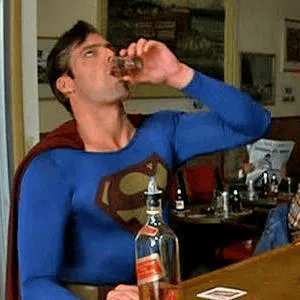
Besides, we’ve SEEN that.
Supergirl takes some big swings, gives Kara a moral and emotional identity distinctly different from her cousin’s, and occasionally finds surprising weight beneath an intentionally ridiculous universe.
And yet when it ended, I mostly shrugged.
That’s a difficult reaction for a movie like this to overcome, because I’m probably among the more forgiving members of its audience. I was willing to accept the weirdness of the Supergirl universe, whose aesthetic is more than a little Guardians of the Galaxy-adjacent.
I see you back there, James Gunn.
That said, I should point out that Gunn (credited as a producer) isn’t the director here, and Craig Gillespie (I, Tonya, Cruella, Pam & Tommy) deserves kudos for giving this particular cog in the groaning DCU machinery its own personality. Gunn’s fingerprints are certainly visible, but Gillespie pulls the Western influences, cosmic absurdity, and underlying melancholy into a story that—if you’re willing to meet it on its own terms—has considerably more going on than its place on the DC production line might suggest.
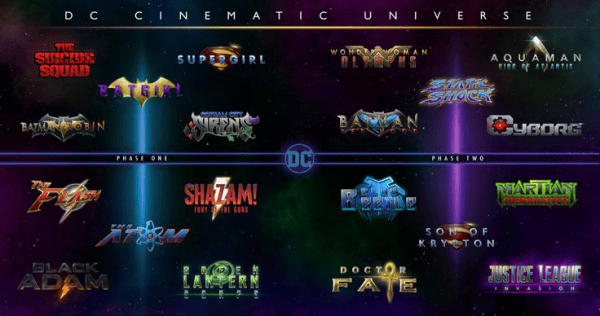
Pictured: Groaning machinery.
We didn’t need another origin story, and outside of what was necessary to understand Kara, we were mercifully spared one.
I wasn’t offended by its politics, because Supergirl is not a political movie. It’s a movie about a grown woman who’s comfortable flying in a miniskirt and can shoot lasers out of her eyes.
And also likes dogs.
I was also not threatened by Milly Alcock—who is literally the glue that holds the movie together—nor was I particularly concerned about whether “Supergirl” should be called “Superwoman.”
I simply wanted the movie to show me who Kara Zor-El was and give me a reason to care.
It did.
I just wish it had given me a slightly better movie around her to care about.
Categories

Bruce Hall View All
“When some wild-eyed, eight-foot-tall maniac grabs your neck, taps the back of your favorite head up against the barroom wall, and he looks you crooked in the eye and he asks you if ya paid your dues, you just stare that big sucker right back in the eye, and you remember what ol' Bruce Hall always says at a time like that: "Have ya paid your dues, Bruce?" "Yes sir, the check is in the mail."

