
Cape Fear (2026)
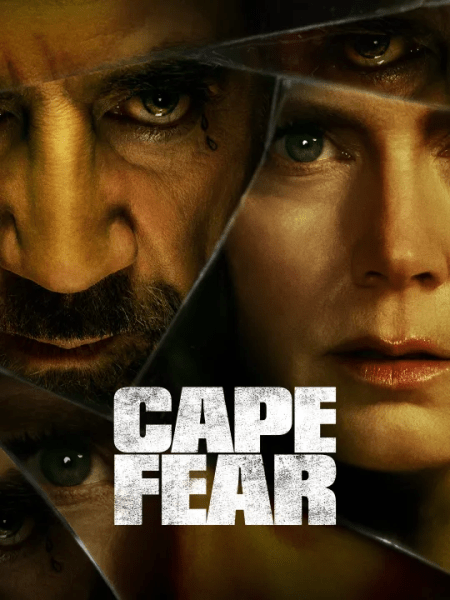
Not sure what I expected, but this was NOT what I expected.
One of the hardest things I’ve ever had to do is sit through all ten hours of Apple TV’s star-studded reimagining of Cape Fear.
There, I said it.
Now, does this put it on the podium with things like “reset my own separated shoulder”, “getting divorced”, or “losing a parent”?
No, I’m placing my experience with Cape Fear firmly in the “First World Problems” category. But that doesn’t mean the experience hasn’t changed what I believe prestige television can potentially be.
Let’s go back to how this all started.
Most people, if you ask them whether they recall the movie Cape Fear, will probably refer to the Martin Scorsese film starring Robert De Niro and Nick Nolte. It attained a high level of cultural prominence in the 1990s and wrote its own set of rules for presenting a modern cinematic thriller. De Niro is an inexorable cosmic force, and the film’s intentionally bombastic style serves as a warped window into the worldview of a dangerously disturbed criminal.
Boomers and dedicated film nerds will recall the 1962 incarnation of Cape Fear, directed by J. Lee Thompson, starring Gregory Peck and Robert Mitchum. Based on the novel The Executioners by John D. MacDonald, it tells the story of Sam Bowden, an attorney who catches a violent criminal, Max Cady, sexually assaulting a woman. Bowden testifies against Cady, who is sentenced to 8 years in prison.
Considering the nature of his offense, Cady does some seriously hard time.
Years later, when Cady is released, he begins stalking Bowden, threatens his family (very ably played by Polly Bergen and Lori Martin) with sexual violence, and vows to bring the same pain and suffering he experienced in prison down upon the family.
Peck’s Sam was an honest citizen with a loving family whose orderly world was invaded by an almost impossibly evil man.
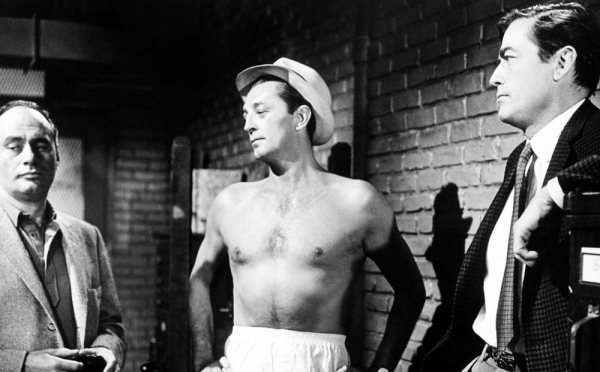
Evil yes, but he’s crushing that hat.
By 1991, Scorsese, clearly a fan of the original, crafted a remake in which De Niro’s Cady remained an unrepentant monster, but this time Sam Bowden is not the square-jawed paragon of American Virtue depicted by Peck. He’s the grittier, more rough-around-the-edges Nick Nolte, whose version of the character had been Cady’s defense lawyer.
Not wanting to see this violent predator escape justice on a technicality, Nolte-Bowden chooses to compromise his ethics, suppress evidence, and ensure that Cady receives a maximum sentence.
This version of Sam – and the Bowdens as a family (played very differently but equally ably by Jessica Lange and Juliette Lewis) – are anything but idyllic. Sam likes to check out the ladies, and his relationship with his wife is rocky at best. Their daughter occupies familiar territory for a teenager trapped inside a deeply troubled home: disaffected, searching for an identity and, sadly, ripe for manipulation.
When Cady comes for them, the cracks are already there. He doesn’t have to drag the Bowdens down into the muck with him; they’re already circling the drain.
Whereas Mitchum’s Cady threatens us by taking up all the oxygen in a viscerally inventive yet otherwise procedural noir thriller, De Niro’s version is a wrecking ball who eschews subtlety almost entirely. Scorsese’s film borrows from and heightens Bernard Herrmann’s unforgettable 1962 score, and its visual language assaults us with Dutch angles, crash-focus shots, and high-contrast lighting, designed to frame the film as a descent into the unbalanced, rage- and vengeance-obsessed mind of Cady himself.
It’s a noir-adjacent fun house filled with mirrors, where the mirrors have been replaced by violence and the “fun” has been exchanged for death.
Which brings us to the 2026 Apple TV version.
Starring Javier Bardem as Cady, Amy Adams as Anna Bowden, Patrick Wilson as Tom Bowden, Lily Collias as their daughter, Natalie, and Joe Anders, who gives me serious Young Joaquin Phoenix vibes as Zach, their troubled son (compliment intended).
This version expands the Bowden clan and raises the stakes by adding layer upon layer of complication to the original conceit.
It is no spoiler to call out that this version of Cape Fear immediately establishes several things:
- In this universe, Max Cady was innocent of the crime he was accused of.
- Anna was his defense lawyer; there IS no Sam in this version.
- Tom was the prosecutor.
- Anna and Tom fell in love during the trial.
- In some way, they conspired to send Max to prison to cover their own indiscretions.
- This version of the Bowden household is not merely compromised; it is already at risk of total disintegration.
They are barely functioning as a family.
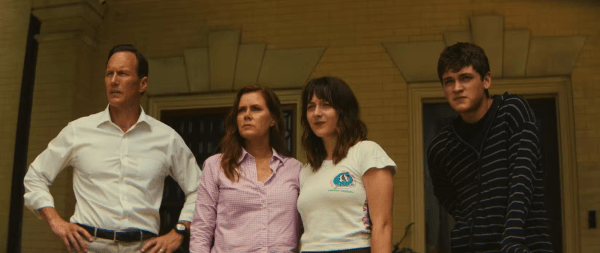
Don’t let how happy they look fool you
Tom likes to straddle the line at work between playful flirting and sexual transgression. Anna is a recovering alcoholic whose acquaintance with the truth is casual at best. Zach is a lost, sullen boy who seems to revel in the chaos of his family life. Natalie seems to have a well-developed conscience but is at odds with her mother and emotionally estranged from Tom.
She and Zach seem to connect thanks to her empathy but also because they’re survivors of the same fractured family dynamic.
And into this enters Cady, who, in episode one, has been released back into society after his unjust imprisonment came to light. So far, the public is unaware of any compromises made by the Bowdens, but Anna and Tom know what happened even if we don’t yet, and more importantly:
Cady knows.
Just like his counterparts in 1962 and 1991, Bardem’s Cady has taken advantage of his time behind bars, learned a thing or two about the law, and, just as De Niro’s did, determined that he had been done an injustice by his own lawyer.
What’s more, we discover that while Cady was certainly not a good man when he went to prison, it was his experiences there that turned him into the monster he became. This differs from the two previous screen interpretations, and it caps off a remarkable narrative progression in the Cape Fear Cinematic Universe (CFCU).
- 1962 – Completely innocent Bowden confronts completely guilty Cady.
- 1991 – Somewhat guilty Bowden confronts completely guilty Cady.
- 2026 – Completely guilty Bowdens confront originally innocent, not entirely decent, but ultimately completely guilty Cady.
Don’t worry, this is not to spoil the series. These are the complex baselines established in the first episode. I am, in fact, providing you with the context you can hopefully use to determine whether this version of Cape Fear is worth your time, because I can assure you that my first thought was:
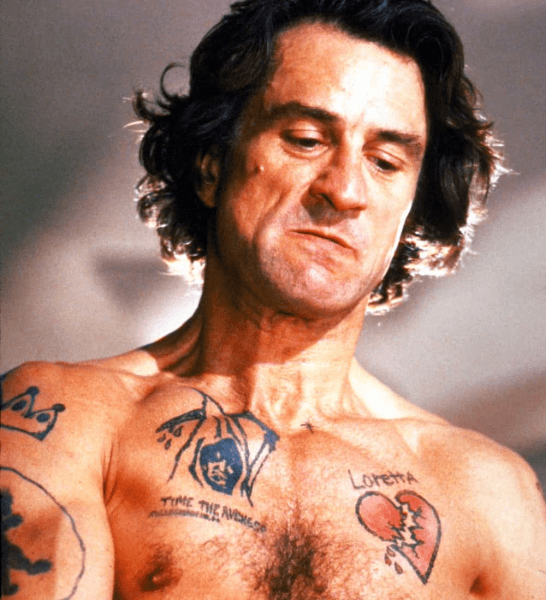
How are they going to stretch De Niro over ten hours?
Thankfully, they don’t try to.
With Scorsese and (yes) Steven Spielberg appearing as executive producers, the 2026 version comes with the blessing of two of the principal creative forces behind the 1991 film. Additionally, the primary creators behind this new Cape Fear—showrunner Nick Antosca, cinematographer Eben Bolter, and production designer Jamie Walker McCall—consistently and conspicuously honor and reference Scorsese’s aesthetic.
But they are also clearly targeting something that neither previous version could at the time.
Cady enters the story intending to destroy Anna’s family, only to discover that there isn’t much of a family there to destroy. Anna, Tom, Zach, and Natalie are already separated from one another by secrets, resentments, and moral compromises. Consequently, Cady’s campaign becomes far stranger and perhaps, even, more unsettling than what we’ve seen before.
Anna’s version of the family – and Amy Adams IS asked to carry much of the narrative burden of this series – doesn’t yet know who they are. They are already nearly as estranged from one another as each version of Cady has been from mainstream society.
Mitchum’s Cady drags a successful family into the literal and ethical swamp where he, and others like him, exist. De Niro’s version imposes an exaggerated biblical sense of vengeance upon a family already buckling under its own weighty complications. And Javier Bardem finally has the opportunity to develop a complex villain over ten episodes, whose goal is to take an already badly bruised interpersonal dynamic and turn each of them into a twisted, hopeless version of himself.
His Cady is an ethical parasite whose presence corrupts everyone around him.
And we are forced to watch this at work as he and the Bowdens exchange underhanded salvos. Over the course of the series, Anna repeatedly attempts to fight Cady on his own turf, as Peck and Nolte did before her. But in this case, each attempt Anna makes to exercise legal or moral authority over the situation ultimately plays into Max’s hands to the degree that it begins to look unintentionally comical as the story develops.
This will matter later.
Meanwhile, Tom’s attempts to walk a moral tightrope at the office, combined with his increasingly fraught relationship with Anna, make him as ethically suspect as his wife – from the beginning. At the same time, any sympathy we have for the children begins to rapidly evaporate to the point where, by the midpoint of the season, I was ready to tap out on these increasingly terrible people, only to conclude that once you’ve made it halfway through something, you’d be a fool not to finish it.
Even if that means powering through the back half of a television series that makes you feel like you’re lying face down in a sanitary sewer.

Kind of like, whatever this is.
And here’s the complicated part: I don’t even mean that as an insult.
Apple’s Cape Fear is relentlessly unpleasant, in a way that excludes the occasional moments of humanity that dot its predecessors. But over time I became increasingly aware that this ugliness was largely the point. This isn’t a series about nice people being terrorized by a monster.
It’s about severely damaged people being systematically stripped of the things they believe distinguish them from the monster hunting them.
And as exhausting as it is, there is some remarkable creative work being done here.
If De Niro’s Cady was a wrecking ball, Bardem’s is a finely sharpened paring knife who fits nicely within Mitchum’s original philosophy of “death by a thousand cuts”. Bardem-as-Cady is certainly capable of extraordinary violence, but unlike his predecessors, violence isn’t necessarily his preferred instrument. This psychopath can be charming, funny, wounded, paternal, ridiculous, and, on occasion, even strangely sympathetic.
Bardem understands that ten hours of Mitchum suffocating us with his physical presence or De Niro screaming for vengeance would become exhausting almost immediately.
Instead, he lets our antagonist get close enough to us that occasionally we – perhaps shamefully – almost forget who and what he is.
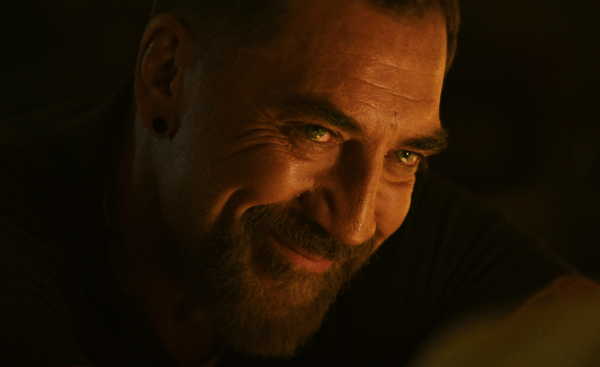
Care to take a guess?
Patrick Wilson shines because he’s adept at breathing life into morally compromised characters who inherently understand that something is terribly wrong with what they’re doing.
And critically, Adams is effective here because she never seems particularly interested in asking us to forgive Anna. This uncompromising quality is why I call her the “George Lazenby” of Lois Lanes (read: underrated).
She’s all at once intelligent, frightened, arrogant, resourceful, and repeatedly convinced that the next clever thing she does will finally put everything back under her control. The tragedy, and occasionally the dark humor of it, is that she seems continuously incapable of recognizing how effortlessly Cady can change the rules of their engagement.
I mean, come on. Gregory Peck figured THAT out in 30 minutes.
There IS no Superman in this story.
In the end, the most interesting thing to me about this new, glossy, referential version of Cape Fear is that the Bowdens do not necessarily become better people as a result of their plight.
They simply become better Bowdens.
And this is where Apple’s Cape Fear very nearly won me.
Not because I suddenly liked these people. I didn’t. Not because I thought their ordeal had redeemed them. It hadn’t. But after spending ten hours watching Cady and the Bowdens reshape and escape one another, I became convinced that the people they eventually became represented the logical next step in a story that has been evolving for more than sixty years.
Then came the landing.
Imagine an Olympic gymnast putting together a brilliant, bronze medal-worthy routine only to faceplant right in front of the judges.
Imagine the announcer, calmly and with a hint of forced melancholy, murmuring:
“Well, that was promising, right up to the end. What an effort!”
Originally, Cape Fear asks Gregory Peck’s Bowden to make a decision that says something fundamental about the man he has managed to remain. And I believed him. Scorsese’s version arrives at a very different conclusion, but it’s one appropriate to the morally compromised “Sam” that Nick Nolte had been playing.
I believed that, too.
But the 2026 adaptation spends nearly half of Earth’s rotational period in screen time, stripping the Bowdens of any and all moral certainty. It allows Cady to crawl inside the family and rearrange their relationships at will. This is terrifying, but it also gives Anna and her family the freedom to become uglier, tougher, more resourceful, more dangerous, and, ironically, perhaps more recognizably a unit.
It earns their resilience, just as the previous versions do. I loved that.
It just doesn’t earn its eventual resolution. It’s an ending that feels imported from a version of Cape Fear these characters never inhabited.
This is precisely where the Bowdens’ ultimate lack of moral authority weakens the story’s resolution. It made me deeply unhappy because, as ugly as it was to watch, Cape Fear 2026 remains a worthy and compelling adaptation, particularly given its narrative pedigree.
So should you see it? Sure. Yes.
Just…for God’s sake – for YOUR sake – take a week off in between episodes.
It’s that dark.
And be prepared to have more questions—and perhaps a few grievances—the moment it ends than you did ten hours, or even five minutes, earlier.
Warning: Old School trailers tended to give away too much.
This one is better, more effective, yet is also just as much of its time.
The least successful adaptation provides the best trailer. I kind of wish the final product had been as inherently exhilarating.
Categories

Bruce Hall View All
“When some wild-eyed, eight-foot-tall maniac grabs your neck, taps the back of your favorite head up against the barroom wall, and he looks you crooked in the eye and he asks you if ya paid your dues, you just stare that big sucker right back in the eye, and you remember what ol' Bruce Hall always says at a time like that: "Have ya paid your dues, Bruce?" "Yes sir, the check is in the mail."

